
The Future of AI in Orthodontics
In orthodontics, conversations about AI tend to converge in one direction:
Will AI replace orthodontists?
I don’t see it that way.
What is actually happening is not replacement,
but a shift in how we work, where we work, and when we work.
Orthodontics has always been data-driven.
Radiographs, facial analysis, intraoral scans, treatment records—
clinical decisions have always been made by integrating multiple layers of data.
That is why digital technologies have been relatively easy to adopt in this field.
But recently, a different kind of change is emerging.
The work itself is moving.
Case review, treatment planning, and decision-making
no longer have to happen chairside.
They continue after clinic hours—
at home, or in entirely different environments.
In a sense, orthodontics is expanding into
off-the-clinic work—a form of lightweight time.
As data becomes digital, space changes as well.
There is less need to store physical charts.
Less need to keep plaster models.
Even lab workflows are rapidly shifting—
from traditional casting methods to 3D printing and fully digital processes.
If we step back, the direction is clear.
Dentistry is becoming lighter.
—lighter in space.
Clinical workflows are also evolving.
Traditionally, dentistry operated as a
six-handed system, involving multiple staff members.
But increasingly:
- Reception is handled by kiosks
- Charting is assisted by voice and AI
- Administrative and management tasks are supported by software
And with digital data at the center,
a structure that allows remote management is emerging.
If this trend continues,
it will naturally move closer to a two-handed system
—lightweight in workforce.
So what is the role of AI in this shift?
Not replacement, but assistance.
AI organizes data,
accelerates analysis,
and visualizes results.
It does not make decisions.
Instead,
it enables better decisions.
In this context, what matters is not just processing data,
but creating an environment where we can think through data—
to analyze,
to structure,
and to explain.
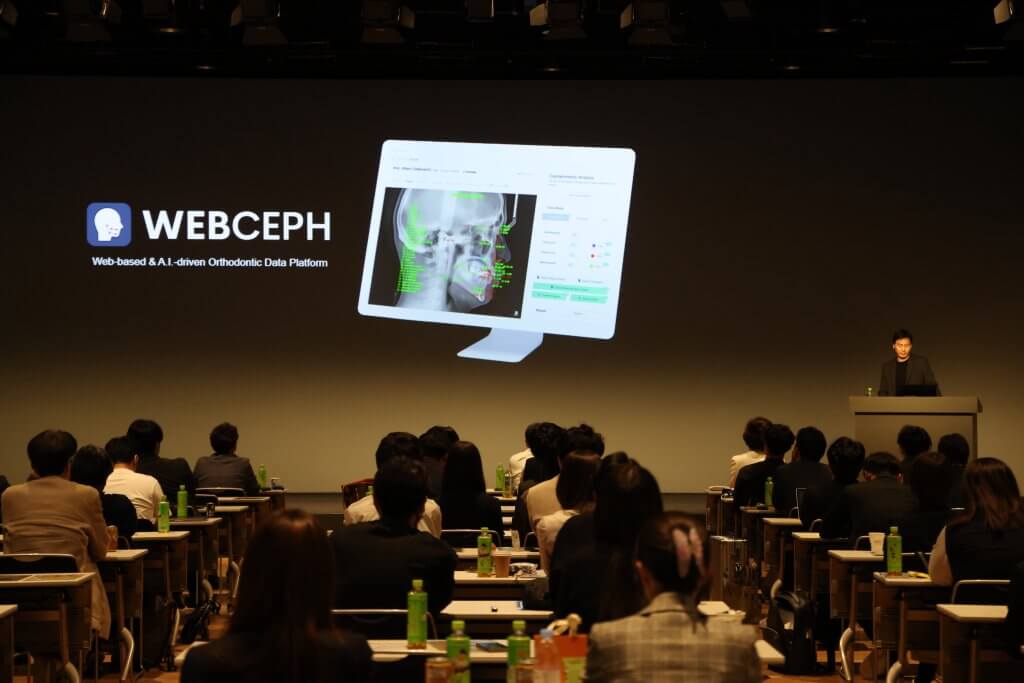
This is where WebCeph plays a role.
It allows access from anywhere,
enables case review at any time,
and supports the process of organizing one’s thoughts.
It is not just a tool,
but an environment that extends thinking.
There are, of course, constraints.
Regulatory frameworks and legal boundaries vary by country.
In Korea, in particular,
remote monitoring and automation may evolve more slowly than expected.
Still, the direction is clear.
Dentistry is becoming lighter.
Work is expanding beyond the clinic.
Repetitive tasks are diminishing.
The essence of this change is not technology itself,
but the transformation of how work is structured.
AI will not replace orthodontists.
But orthodontists,
will gradually become digital nomads.